Port of Long Beach Sees Cargo Decline for May
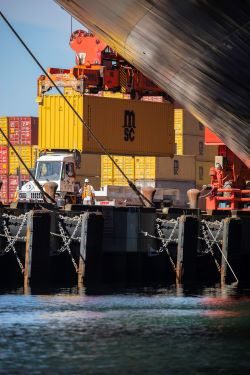
Trade down 8.2% last month due to tariffs imposed on goods
Trade moving through the Port of Long Beach declined 8.2% in May due to tariffs and retaliatory tariffs, but a temporary pause on those fees will likely trigger a cargo surge by late June.
Dockworkers and terminal operators processed 639,160 twenty-foot equivalent units in May, down 8.2% from the same month last year. Imports dropped 13.4% to 299,116 TEUs and exports decreased 18.6% to 82,149 TEUs. Empty containers moving through the Port rose 3.2% to 257,895 TEUs.
“We remain cautiously optimistic that import cargo will rebound at the end of June and into July just in time for the peak shipping season, when retailers stock the shelves with back-to-school supplies and begin preparations for the winter holidays,” said Port of Long Beach CEO Mario Cordero. “While uncertainty remains for the business sector, the Port of Long Beach is continuing to invest in rail and terminal improvements to move cargo efficiently, safely and sustainably.”
“We are monitoring the development of the new trade policies and the effects on our dockworkers and others across the supply chain,” said Long Beach Harbor Commission President Bonnie Lowenthal. “We are staying in close contact with our customers and other port stakeholders as they work to handle the ongoing changes in trade.”
The Port has moved 4,042,228 TEUs during the first five months of 2025, up 17.2% from the same period in 2024.
For complete numbers, visit polb.com/statistics.
In 2025, the Port is celebrating the 20th anniversary of the Green Port Policy, which has led to aggressive, industry-leading programs to improve air and water quality, protect marine wildlife and implement sustainable practices. To learn more, visit www.polb.com/environment.

The Port of Long Beach is a global leader in green port initiatives and top-notch customer service, moving cargo with reliability, speed and efficiency. As the premier U.S. gateway for trans-Pacific trade, the Port handles trade valued at more than $300 billion annually and supports 2.7 million jobs across the United States, including 691,000 in Southern California. It is one of 18 commercial strategic seaports in the United States, with a duty to support force deployment during contingencies and other national defense emergencies. In 2025, the Port is celebrating “20 Years of Leading Green,” marking two decades of its landmark Green Port Policy that has dramatically reduced environmental impacts from operations. Industry leaders named Long Beach “The Best West Coast Seaport in North America” in 2024 for the sixth consecutive year. During the next 10 years, the Port is planning $3.2 billion in capital improvements aimed at enhancing capacity, competitiveness and sustainability.