From the Editor: Contemplating the Interconnected Role of Humans and Nature
I’ve been reading about the role the environment plays in our society—past, present and future—and it’s raising questions I don’t know the answer to, but questions that absolutely need answers. Many of our readers know more about this topic than me, but I want to review some of the roles our environment plays, at least so I can frame some of the questions that come to mind.
Our Journey
Long ago, people settled near rivers as a water source. They chose the geography to better plant and harvest food, and they looked for a climate that would enable them to create suitable shelter. The environment (nature) played a major role in directing people’s lives.
I believe one major impetus—intentional or not—was to find a “comfortable” place, so reacting to the environment wasn’t a daily, time-consuming task. The ability to live in such a place provided for physical and mental health as well as time to develop relationships and community in addition to creating an easier lifestyle. The invention of tools, games, new recipes and ways of working with nature (the beginnings of engineering) became a priority for growth and community wellbeing.
Somewhere along the way, humans became more aware that they could control the environment and make nature work for them. We invented more things, usually to increase production or make daily life easier. We knew we were impacting the world, and we began to create safeguards to protect us and our environment from any harmful effects of the progress we made. We realized that access to clean air, water and nutritious food—as well as opportunities for physical activity in natural settings—contribute to better physical health. When the environment isn’t a challenge, we can foster better social interactions and a community-minded atmosphere.
We Know All These Things
We know our environment is extremely important to our wellbeing. We know that—except for the relatively small number of atoms we’ve sent to or retrieved from outer space—we must live with the atoms that have always been here. We drink the same water dinosaurs drank. There’s a tree in my yard that Abraham Lincoln may have walked by. We must breathe the air that is “stuck” in our atmosphere. We live with the environment that nature provided, and we altered. But we must remember that, in essence, a healthy environment is fundamental to human wellbeing, providing the resources and conditions necessary for individuals and communities to thrive.
By all accounts, climate change is contributing to the deterioration of the current environmental conditions we enjoy. There’s a debated statistic that 97 percent of climate scientists agree that climate change is happening and is primarily caused by humans. The exact percent is irrelevant, as under any counting it’s the vast majority, and even the few outliers only contest that the main cause may not be humans.
An “engineering” way to see the effects of climate change is that so many of our infrastructure facilities were designed for conditions that no longer exist. The 100-year storms occur much more frequently. Our highway system was designed for fewer and lighter traffic loads. Our electrical grid is stressed more often because of extreme heat and cold.
So About Those Questions …
Why do we allow political factions to dictate our environmental policies? We, as engineers and scientists, know we can’t continue on the path we’re following without severe detrimental results.
Why are the media not pushing the fragile state of the environment every day? It’s increasingly important for everyone to know the environment’s current state based on scientific facts.
What will we say to younger generations who ask us why we didn’t do something while we had the chance?
We likely all suspect that the answer to some of these questions boils down to money. Some will say we can’t afford to spend that much money to fix things. Some will say we have more important priorities—ask any politician. Some will say their lifestyle depends on fossil fuels regardless of the proven harm it creates. But in nature’s economy, the currency is quality of life, not dollars.

About Robert Schickel
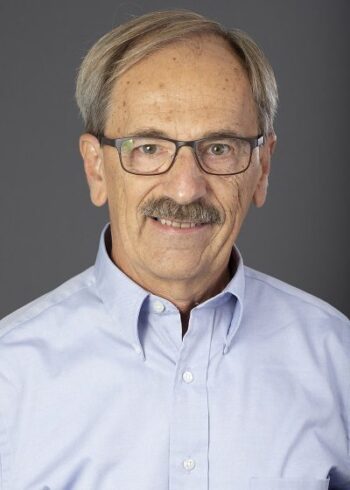
Robert Schickel was born in New Jersey and received his BS in Civil Engineering degree in 1971 from Valparaiso University in Indiana. His career started as a bridge design engineer and expanded to include design of various transportation facilities, including highways, bridges, rail lines and stations, and airport runways. Mr. Schickel managed engineering offices ranging from 20 to 140 people. He also served as a consultant to a large utility company. Mr. Schickel currently resides in Indiana and serves as Adjunct Professor for the College of Engineering at Valparaiso University. He enjoys his retired life at his lake house, playing golf, listening to music and spending time with his family, especially his grandchildren.