From the Editor: Hoping Engineers Can Help Right the Ship
The (now 5th) annual Informed Infrastructure Sustainable Engineering Issue includes various articles and columns that highlight sustainable engineering through projects and commentary. As engineers, we continue to explore, conceptualize, develop and implement sustainability into standards, procedures and policies as well as our projects.
Leading Universities
A recent headline caught my attention: “Purdue University launches School of Sustainability Engineering and Environmental Engineering to meet growing industry demand” (iimag.link/OkDFI).
This is a huge, forward-looking step to focus on training young engineers to design projects with an emphasis on preserving the environment and the future of our planet. Purdue University should be commended for initiating this program. Businesses are looking for qualified professionals to improve their processes to reduce their impact on the environment while remaining profitable. The following is a quote from the Purdue website:
“This surging demand underscores the need for a technically skilled workforce capable of designing systems that incorporate such technical sustainability principles as resource efficiency, waste reduction and circular economy (e.g., recycling and remanufacturing).”
At Valparaiso University, the Civil/Environmental Senior Project Course is encouraged to use the Envision Sustainable Infrastructure Framework developed by the Institute for Sustainable Infrastructure. Envision helps engineers make decisions based on a variety of scored factors to create a “best” solution. As its promotional material says, Envision asks not only “are we doing the project right, but also, are we doing the right project?” I look forward to including this in our senior design projects.
Sailing Away
I normally only have only a minor interest in international sailboat racing, but this fall I will be traveling to Barcelona during the time of the America’s Cup. As I was researching for this issue, I came across an article that explained how some of the technologies used on these ultra-sophisticated boats are being applied to the international shipping industry. The article points out that, similar to car racing, every little improvement counts. If a racing boat can shave off a few seconds or add a couple of knots, that may be all that’s needed to be successful. This strategy is being tested and applied to shipping vessels.
While the shipping industry currently contributes only 3 percent of greenhouse gas emissions (similar to air travel), the amount has been growing faster than other sectors, so any improvement will make a significant difference. One general term I learned is “wind propulsion.” A company added two wing sails to one of its ships and measured a 37 percent reduction in emissions. Another innovation is to replace the crew block (the huge vertical flat structure that spans the width of the vessel) with a smaller, more aerodynamic structure. But to me, the coolest thing from the world of sailing is the adaptation of foil technology to shipping vessels. Hopefully, you’ve seen the racing boats gliding over the water on foils, creating the smallest amount of friction possible. This technology is being added to larger vessels, not to raise them out of the water, but to correct for pitch and roll (new terms I also learned), reducing fuel consumption and thereby reducing emissions.
In Other News …
It’s sometimes difficult to remain positive about all the new ideas in sustainability that our bright engineers come up with. Funding for education, research and testing of new solutions is being challenged (attacked?). A quick review of the ASCE’s Report Card for America’s Infrastructure webpage is depressing. Each category reflects a significant reduction in funding for the next fiscal year.
The Office of Federal Chief Sustainability Officer shows the following message for every department: “The FY 2024 OMB Federal Sustainability Scorecards are currently under development.” Note that this says FY 2024. From the White House website, energy usage is deemed to be under attack by fines for emissions, and it says that “Many States have enacted, or are in the process of enacting, burdensome and ideologically motivated ‘climate change’ or energy policies …” Not exactly a positive view of sustainability.
But as engineers, we know we must continue. It’s in all our public ethics statements. We will provide for public safety and preservation of our environment.
The sailing example is only one of the exciting transfers of technologies in sustainability. Does it cost money? Of course it does. But sooner or later, we’ll get to the point where cost is only a minor factor in the equation. Our environment will be making decisions for us. Looking at weather reports and related data makes me wonder how much longer Mother Nature will be patient

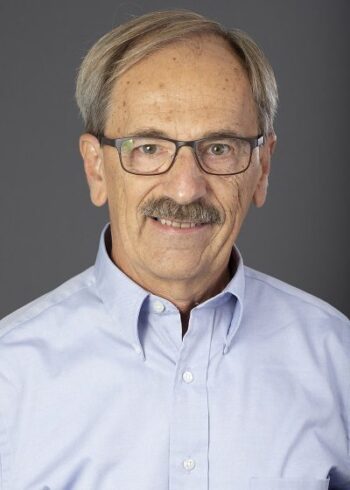
About Robert Schickel
Robert Schickel was born in New Jersey and received his BS in Civil Engineering degree in 1971 from Valparaiso University in Indiana. His career started as a bridge design engineer and expanded to include design of various transportation facilities, including highways, bridges, rail lines and stations, and airport runways. Mr. Schickel managed engineering offices ranging from 20 to 140 people. He also served as a consultant to a large utility company. Mr. Schickel currently resides in Indiana and serves as Adjunct Professor for the College of Engineering at Valparaiso University. He enjoys his retired life at his lake house, playing golf, listening to music and spending time with his family, especially his grandchildren.