Preliminary Assessment of the M6.0 Earthquake in Kunar, Afghanistan
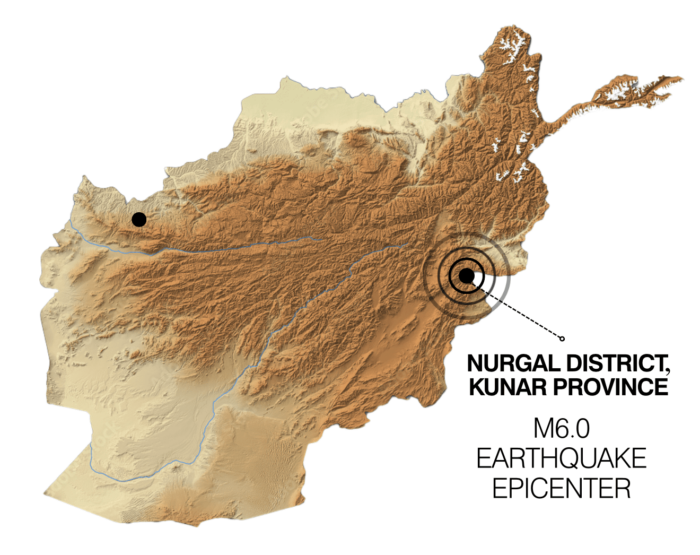
On 31 August 2025 at 23:47 local time, a magnitude 6.0 earthquake struck Nangarhar, Kunar, Laghman, and Nuristan provinces in eastern Afghanistan. The quake was relatively shallow, with a depth of approximately 8 km. The epicenter was located in Nurgal District, Kunar Province.
Shaking was felt not only in Kunar and Nangarhar but also in Kabul, neighboring provinces, and across the border in Pakistan.
This initial report is based on photos, videos, and phone conversations with local engineers. Ground conditions may reveal further details as assessments continue.

Earthquake Impact Metrics
As of September 2, 2025, the Afghanistan National Disaster Management Authority (ANDMA) has confirmed:
- Fatalities: 1,411
- Injuries: 3,124
- Completely destroyed houses: 5,412
Key Findings
Habitation
- Average household size: 8 individuals.
- Privacy for women and girls is highly valued in the affected region.
- Many homes built with stone, mud bricks, and wood.
- Limited cellular service remains available.
- Narrow streets blocked by collapsed walls and structures.
Housing Typology
- Houses follow vernacular construction principles.
- Most are flat-roofed, built with stone, mud, and timber.
- Multi-story homes adapt to the mountainous terrain.
Quality of Materials and Work
Foundations and Stem Walls
- Dry stone: stones stacked without mortar.
- Stone + mud: stone bound with mud mortar.
- Mud or mud-brick: structures using earth as binder or building material.
Walls
- Constructed from mud (adobe or cob) and stone (dry stone or stone with mortar).
- Wooden timbers embedded within mud and stone walls (Figure 3).
- Structural deficiencies identified:
- Limited local construction skills leading to low-quality workmanship.
- Insufficient wall thickness-to-height ratios, contributing to failures.
- Need for further field validation of mud and stone quality.
Roofs
- All houses feature flat roofs built with wooden beams, planks, and soil.
- Annual application of mud plaster adds weight over time.
- This results in heavier seismic loads, causing significant damage to walls.
Miyamoto International and Miyamoto Relief are dedicated to guiding “build back safer” efforts, strengthening traditional and culturally appropriate housing with simple, effective engineering practices. Our goal is clear: save lives and build lasting resilience in Afghanistan.