Innovative Steel Solutions Help Revitalize Gund Hall
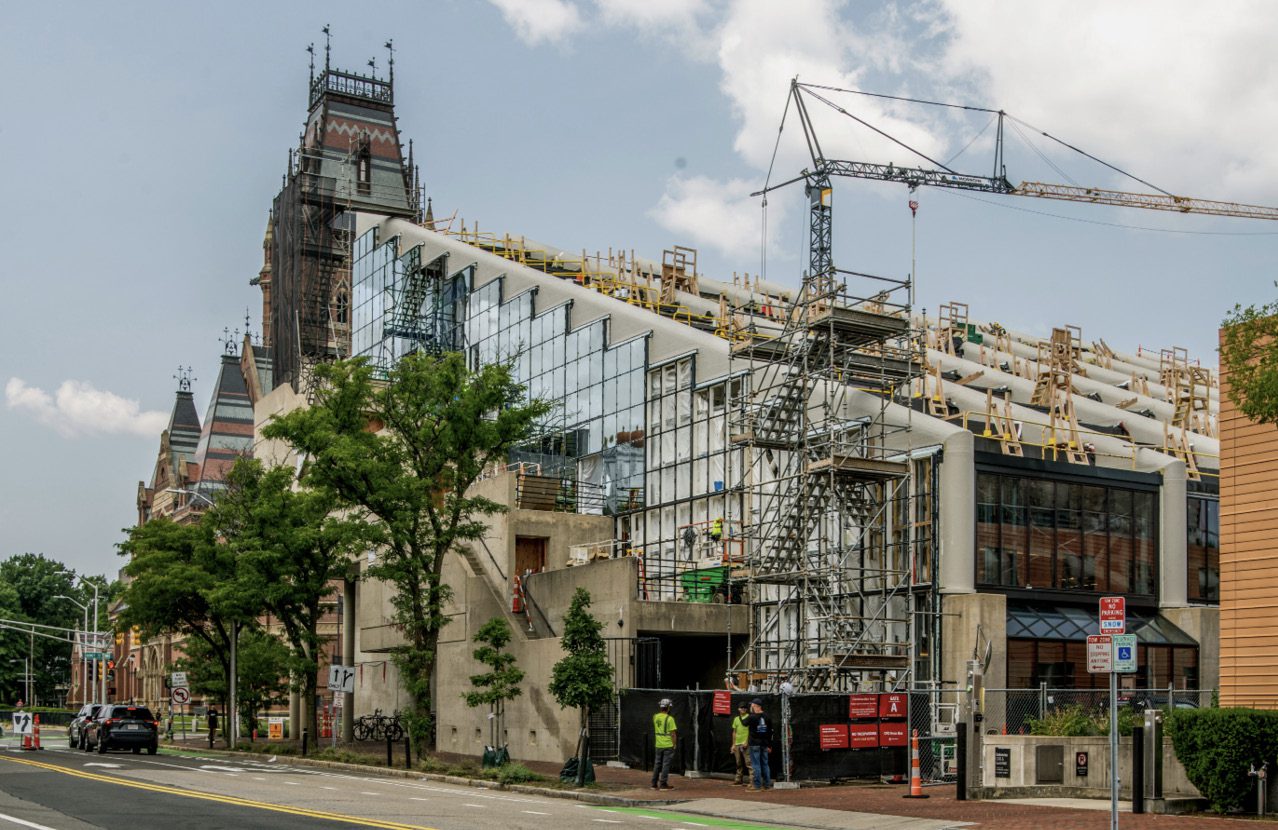
Steel was used to strengthen and modernize Gund Hall’s existing structure, allowing for necessary upgrades without compromising the integrity of the original 1972 design.
Since its completion in 1972, Gund Hall has stood as an architectural landmark on Harvard’s Cambridge, Mass., campus, embodying the bold vision of its designer, alumnus John Andrews. As home of the university’s Graduate School of Design (GSD), the iconic Brutalist building’s distinctive form—defined by its dramatic open studio space, cascading roof, and exposed concrete and steel structure—has fostered generations of architects, urban planners and designers.
“Andrews was really handpicked by the dean at the time to design a building that was conceived as a space that could bring together multiple design disciplines,” notes George H. Gard, AIA, project architect for Boston-based Bruner/Cott Architects and another GSD alumnus. “A former professor there liked to call it the ‘largest remaining one-room schoolhouse in the country,’ and you truly get that sense standing underneath those soaring steel trusses.”

Gund Hall’s envelope upgrade increased building performance, optimized carbon, and elevated the learning and teaching experience for the architecture studio. The project comprises the following upgrades: studio north and south hybrid vacuum insulated-glazed curtain wall, studio clerestory triple-glazed windows, studio east triple-glazed curtain wall, new interior shades, and concrete facade repair.
Yet, despite its enduring significance, Gund Hall’s original construction posed challenges in energy efficiency, thermal comfort and long-term sustainability. In 2024, more than 50 years after its debut, the building went through a transformative renovation aimed at addressing these challenges while preserving the integrity of its modernist design. Led by Bruner/Cott, the renovation focused on upgrading Gund Hall’s envelope with high-performance materials, particularly in its extensive glazing system, to improve insulation and reduce energy consumption. The project enhanced the building’s environmental performance and set a precedent for the adaptive reuse and conservation of mid-20th-century architecture.
Central to this effort is the innovative use of steel, which remains a defining element of Gund Hall’s structure. The renovation reinforces and modernizes the building’s existing framework, ensuring that it meets contemporary sustainability and accessibility standards.

Portions of the existing steel frames at the north and south curtain walls were replaced to meet current wind-load requirements. (Simpson Gumpertz & Heger)
“When you look at Brutalism, the concrete tends to dominate, and the use of glass and steel is typically secondary,” explains Gard. “Gund Hall is unique because it has a base of concrete, but the roof and enclosing structure is made of steel and glass. It’s a crystalline form sitting on top of the concrete.”

Leaving the heavy skeletal building elements comprised of concrete and steel was an environmentally responsible choice that limited demand for new materials. (Bruner/Cott Architects)
Structural Reinforcement
Gund Hall demanded careful structural intervention to preserve its architectural intent while improving durability. A defining feature of Gund Hall, a cascading studio space known as “the trays,” has long served as the physical and pedagogical heart of the GSD. The four terraced levels, sheltered below a stepped roof supported on a series of 125-foot-long sloping tubular trusses, encourage interaction among students across disciplines, reinforcing the school’s commitment to collaboration and open exchange.
However, their expansive glazing and minimal insulation contributed to thermal discomfort and high energy costs—common concerns for buildings constructed before the energy crisis of the 1970s and increasingly difficult to mitigate through time. Leaks, glare and temperature extremes plagued the space, prompting years of temporary fixes. The current renovation represents a long-awaited resolution to these problems.
“Our task was really to do two things,” says Gard. “We wanted to go beyond fixing those historic problems with leaks to create an envelope that was highly performing and befitting of an architecture school in 2025. At the same time, we wanted to honor the original intent of the design by John Andrews. The challenge was to take a design that came from a time before anyone really thought about energy to a time now when we understand energy, particularly the use of fossil fuels, and reduce how much we use them without destroying what everyone loves about this building.”
Curtain Wall and Glazing Support
Gund Hall’s original facade, characterized by extensive single-pane, uninsulated glass panels, has been modernized with high-performance glazing. The renovation’s focus on improving thermal efficiency and daylighting through its upgraded curtain wall and glazing system enhanced comfort and sustainability while preserving the building’s essential character.
Bruner/Cott worked on a Gund Hall facade replacement project in 2008, but it was halted due to the financial crisis. In 2019, Dean Sarah Whiting revived the initiative as part of GSD’s sustainability and conservation efforts. Using advanced technology unavailable in 2008, the architects collaborated with facade and fabrication experts to redesign the facade with hybrid vacuum-insulated glazing (HVIG).
VIG, which replaces the air- or argon-filled gap in a typical insulating glazing unit (IGU) with a thin vacuum, significantly enhances thermal performance while maintaining a slimmer profile. The new envelope uses VIG in combination with a conventional insulated glazing layer on the building’s gridded north and south elevations. These layers work together to maximize center-of-glass and edge-of-glass performance in a thickness approximately the same as a traditional double-pane IGU. The system achieves a center-of-glass U-value (a measure of heat transmittance) of less than 0.06, delivering thermal performance that’s four times better than a similarly sized double-glazed IGU. By varying the glass and coatings within those layers, the architects maximized beneficial daylight while minimizing glare and adverse solar heat gain.


Gund Hall’s new envelope was designed to maximize thermal performance, reducing operational carbon usage and helping to preserve the structure long-term. (Benjamin Cheung Photography)
Because VIG glass was unavailable in the required large sizes for the vertical east facade, the design team opted for conventional triple-glazed IGU; these were also used at the clerestory. These new assemblies replaced an aging envelope that was originally inspired by car-windshield glazing, which was held in place by L-shaped aluminum brackets and rubber gasketing. The new, more-substantial system required careful detailing to maintain the delicacy of the original elevations. Thermally broken mullions were designed to be as narrow as possible while still accommodating necessary fasteners and drainage. Chamfers and reveals were incorporated into the mullion profiles to create the illusion of slimmer proportions. By optimizing material use, the mullions employ only the necessary amount of aluminum to hold the system in place.
In addition, select portions of the existing steel frames were replaced at the north and south curtain walls to meet current wind-load requirements. This included swapping out some cruciform-shaped joints of rectangular steel tube with new thicker-walled sections.
“The biggest challenge with this detail was working through the constructability,” explains Rachel Shanley, senior project engineer with Waltham, Mass.-based Simpson Gumpertz & Heger. “These sections needed full penetration welds, requiring a backer bar. But the contractor wouldn’t have been able to slide the sections in place with backer bars on all faces, so we came up with a chamfered profile to allow access. In this configuration, some backer bars were on the replacement piece and some on the existing portion, allowing the contractor to slide the sections into place and achieve the necessary welding.”
The project replaced 1,617 glazing units, improving energy efficiency and occupant comfort. Motorized window shades mitigate heat gain and reduce glare for students working in the trays. The pit, a multiuse space, was temporarily walled off as a “laboratory” for the renovation’s glazing system mockups. The area was used to assess three replacement glazing systems and gave students a peek into how building renovations happen in real time. The renovation also included widening terrace exits to make outdoor spaces wheelchair accessible for the first time in the GSD’s history.
Bruner/Cott used Tally, a plug-in for Autodesk Revit, to measure and study options to limit the carbon expended for the renovation, working with sustainability consultants at Vanderweil Engineers to study the reduction in operational carbon emissions and energy consumption. The firm estimates that replacing the studio glazing adds 157,794 kilograms of carbon dioxide equivalent (kgCO2e) to Gund Hall’s embodied carbon footprint, an approximately 5 percent increase (based on contemporary construction). However, the improved performance will save 18,000 kgCO2e annually, offsetting the added carbon in about nine years. To further reduce operating energy, the team considered installing photovoltaics on the cascading roofs above the trays. However, this was deemed impractical due to the east-facing orientation and the extensive roof reinforcement required to support the panels—reinforcing that would have negated the carbon savings of the panels.
Exposed Architectural Elements
In keeping with the Brutalist ethos of Gund Hall, the renovation embraced steel as a visible architectural element, highlighting the building’s industrial aesthetic. Exposed steel beams, braces and connections complement the raw concrete and glass palette. These elements are not only functional but also contribute to the building’s visual identity, celebrating its structural logic.
Special attention was given to the detailing of steel connections, ensuring they remained expressive and efficient. The exposed steel components also allowed for future flexibility by creating uninterrupted space. By treating steel as both a structural and design feature, the renovation maintained the integrity of the original material palette while enhancing the overall spatial experience.
Sustainability Enhancements
Besides the high-performance glazing system and its steel framework, steel also played a critical role in related sustainability strategies, particularly in optimizing energy performance and material efficiency. Reused steel components were incorporated wherever possible, reducing the project’s carbon footprint. Steel’s durability and adaptability also ensured that structural interventions would have a long lifespan, minimizing the need for future resource-intensive renovations. These sustainability enhancements aligned with the broader commitment by Harvard and the GSD to environmental responsibility, demonstrating how steel can be used innovatively to support architectural and ecological goals.
“What became really important, particularly to the low-embodied-carbon aspects of the project, was to preserve as much of the existing concrete and steel as we could and work with existing elements, augmenting them only as much as needed to form the structure of the new envelope,” adds Gard.
The renovation includes few new steel components—just tiny clips at the clerestory windows above the trays as well as clips at the bases of the north and south curtain walls—and they’re completely hidden, which was a project priority. This careful balance of conservation and innovation ensured that Gund Hall remains a functional, inspiring environment for the next generation of designers. As institutions worldwide grapple with the balance between preservation and performance, the building’s renovation emerges as a model for how architectural icons can evolve without compromising their original spirit.

About John Hughes
John R. Hughes is a freelance writer specializing in issues related to urban planning and sustainable development. He can be reached at jrhughes@springsips.com.