Back to Basics: Delivering Major Capital Infrastructure Projects In Complex Times
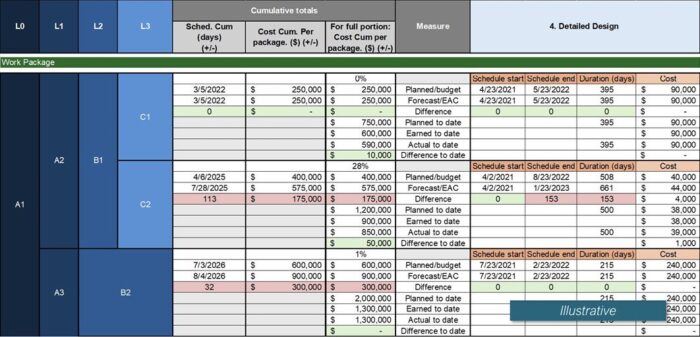
Figure 1. Activity-level plans provide the necessary information to enable execution and problem solving.
The industry has certainly changed since brilliant Scottish engineer Thomas Telford stated that major infrastructure projects (such as his famous Menai Suspension Bridge design in Wales) can be accomplished with “a moderate degree of skill and perseverance.” Planning, developing and delivering modern infrastructure grows more challenging with each passing day. Our once-stable sector is battling to adeptly adjust to influences from global politics, finance and law, all at the blisteringly rapid speed brought upon by the Artificial Intelligence-enabled Internet of Things.
Despite these challenging influences, infrastructure professionals can remain confident that many of the tried-and-true principles of project management remain effective. Indeed, focusing on such principles is proving ever-more critical to the successful delivery of projects in these complex times.
Detailed Planning
It’s well known in infrastructure construction that large projects must be broken down into sufficiently discrete phases, deliverables, work packages, subpackages and activities for manageable execution and to enable real-time schedule and financial tracking throughout the project lifecycle. Although the concept of detailed planning may be well-known, the major capital infrastructure project landscape is littered with examples of its failed execution, and it shouldn’t be. Making the effort to structure projects around detailed activities from the outset enables early detection of potential issues and proactive problem solving as needed.
Think for a moment about any of the significant cost overruns or schedule delays that appear in the news each day. In all likelihood, when the program or project manager first learned of the problem, he or she launched an internal review to determine what happened. The effort would have necessarily involved an ex post facto inquiry into events at the work-package activity level to determine where the overrun or delay occurred. It would’ve taken days or weeks to complete, and results would’ve been presented in a meeting or forum weeks later. The inquiry may have even led to separate inquiries to understand the impact on other work packages.
Such inefficient activity would have occurred (and the opportunity cost of associated time and resources would have been spent) while the problem remained unaddressed. It would have taken even more time to mobilize the assets needed to remediate the issue … and to see if the solution was adequate and sustainable. Inevitably, project team leadership and the industry professionals who learn about it will wonder: could this have been avoided? In short summary: yes, it could have.

Figure 2. A detailed “responsibility, accountability, consulted, informed” (RACI) matrix will make clear the responsibilities of each party.
If the project had successfully embedded activity-level planning, the root cause of the cost overrun or schedule delay would’ve been quickly identified through the missed deadline or large variation between the activity forecasted cost and actual cost. The project then could’ve determined potential impacts to other work packages by identifying similar activities, before requiring the accountable individuals to develop an actionable remediation plan. This rapid pace of identifying the root cause through to addressing it would have a significantly smaller impact to the overarching overrun or delay, when compared to the aforementioned example. As a result, the cost overrun or schedule delay likely would’ve been a minor issue rather than a significant problem.
Execution of activity-task-level planning can be difficult, but the benefits will come through each phase of the project lifecycle and will outweigh the required upfront time and cost investment.
Clearly Defined Roles and Responsibilities
What could be simpler than clearly defined roles and responsibilities? Again, the project landscape suggests that while conceptually basic, successfully embedding the clarity of defined roles and responsibilities in major capital infrastructure projects is surprisingly uncommon.
The emergence of “feel good” contract structures that optimistically, albeit boldly, seek “alliance” and risk sharing are likely partially responsible. Alliance contracting and other forms of risk-sharing arrangements among parties have had unintended consequences: misalignment of roles and responsibilities. This is understandable; if two or more parties are contractually responsible for work—or for delivering outcomes—it can be difficult to discern who is ultimately accountable for a deliverable or task. Unfortunately, such lack of alignment often is discovered when project delivery is already at risk.
Contracts are interesting devices. Historically grounded in conflict resolution, we hope we never need them. Even when we do need them, they’re rarely reviewed and adjudicated in court. Instead, most parties settle in one form or another, because the time and cost of resolution through civil litigation in most jurisdictions is staggeringly wasteful.

Figure 3. Disciplined project monitoring requires detailed project tracking with sufficient detail to make informed decisions
So why do we use contracts? At their best, they clearly define the relationships, specific roles and responsibilities of the parties to avoid the unintended consequences of ambiguity. In other words, if we can use a contract to make clear the responsibilities and accountabilities of each party in relation to a comprehensive set of detailed actions at the outset of a major capital infrastructure project, we’re significantly more likely to avoid cost and schedule crises, and inefficiency.
Infrastructure industry professionals should seek to capture the benefit of clarity at the contracting phase. By spending time upfront to define roles and responsibilities—at the activity level—programs and projects are maximizing the effectiveness of the contract to everyone’s benefit. This will, in turn, provide a uniform understanding for all parties throughout the project lifecycle and help mitigate potential delivery risks often associated with lack of clarity.
Project Discipline, Monitoring and Tracking
Joining together detailed activity planning and clearly defined roles and responsibilities with a disciplined process for project monitoring and tracking ensures that parties are delivering their activities on time and on budget. If project deliverables or milestones are missed, or risks materialize, remediation efforts can be planned for and implemented in real time.
At first blush, this appears to be another simple concept. However, maintaining project discipline can be difficult, especially when facing a “storm” of external influences. Unfortunately, even solid leaders who work to embed proactive monitoring and tracking from the outset can find their projects behind schedule and over budget when discipline wavers.

Figure 4. The availability of emerging technology is increasing, but it is an enabler to project management principles.
Indeed, most projects begin with regular, structured meetings—ones that have a clear purpose and are attended by individuals empowered and knowledgeable to action issues. However, as projects progress, discipline often wavers. Personnel change. Demands from stakeholders distract leaders from participating in relevant meetings. Fear of “getting it wrong” drives teams to defensively filter decisions through a select few leaders, which only adds to their workload, making it less likely they can stay on top of the myriad issues that arise in project planning and delivery.
Many of us can recall the dreaded mid-delivery meeting where we asked for details only to be told that the team would “circle back on it” as it had insufficient information on hand. Or a decision was required to progress, but the team was stalled, looking at one another, unclear who had delegated authority since the previous individual left. The result is decisions taking longer as leaders are waiting for detailed information to be developed and provided, or teams are waiting for the proper person to make the decision. These small wavers can quickly compound and lead to significant inefficiencies through time, impacting on-time and on-budget delivery.
To prevent instances such as these, establishing and maintaining discipline is critical; meetings should be purposeful and planned with a regular cadence to keep the project moving forward. This means ensuring that project reporting and tracking are done at the activity level and sufficient detail is available to make informed decisions; holding people accountable when they miss a milestone or deadline; and ensuring meeting attendees have the necessary delegated authority to keep the project moving forward.
Maintaining such discipline throughout construction will allow programs and projects to focus on delivery and leave space to adapt in real time to external risks and influences.
Enabling Technology
Although not yet a tried-and-true principle of project delivery, it would be naive to not address the increasing use of technology in our work.
It’s now axiomatic to note that technology is a powerful enabler of program planning, development and delivery. However, experience suggests that technology is most effective when paired with the foundational principles of major capital infrastructure projects.
For example, project scheduling technology undoubtedly enhances activity-level planning. However, scheduling systems are only as good as the information that’s provided to them. When a high-level schedule with insufficient detail is input into the best technology, the chances of extracting useful information are low. Conversely, when technology incorporates detailed activities, it can help identify schedule issues and impact, track influences, proactively highlight potential risks, and even propose optimization and remediation opportunities.
In sum, embrace technology. When used as an enabler of disciplined program management, it can be an amazing efficiency multiplier. However, technology in and of itself is not a solution. Be wary of those who suggest it is.
These are indeed complex times for the infrastructure industry. A wide range of powerful influences, including emerging technologies, climate concerns, funding deficits and legal challenges, will force us to be innovative in planning and delivering projects. However, successful infrastructure leaders will be well-served in using proven principles as an anchor in a storm of uncertain times.