The U.S. Must Adapt Its Water-Management Approach to Climate Change
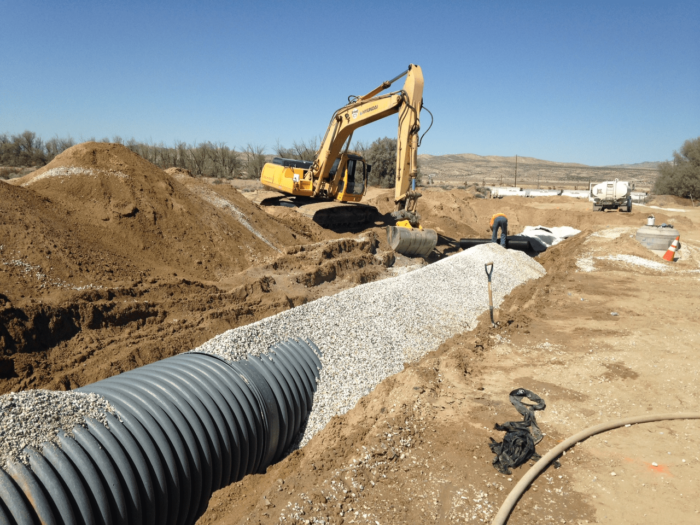
The strength of a pipe system consists of a combination of the pipe itself and the backfill envelope. Proper construction maximizes the drainage capabilities designed into the pipe by maintaining alignment and load-carrying ability.
Climate change is one of the most-critical challenges facing our environment, communities and global economies. It’s an especially challenging time for cities as they look to adopt sustainable-development practices to protect natural resources, while also grappling with the more-immediate need to mitigate the impact of extreme stormwater-related events tied to climate change.
A strong stormwater-management infrastructure enables cities to better protect our most vital resource: water, which is integral to the health of communities everywhere. It also helps communities mitigate some of the most-damaging transitory and physical effects of climate change.
By evolving their approach to stormwater management, communities adapt to our new weather reality. Taking this important step helps protect residents and businesses from the effects of the increasing number of weather events and contributes to overall sustainability goals.
Dealing with Stormwater-Related Events
In 2023, there were 27 stormwater-related natural disasters in the United States that each cost more than $1 billion. These large-scale disasters, which include severe storms, tropical cyclones, atmospheric rivers, flooding, droughts and winter storms, collectively cost a staggering $88 billion. By comparison, if we look back 20 years, there were just six of these types of events in 2003.
Not only is the number of storms increasing, but the storms are also becoming more intense. And many of these storms are producing higher volumes of stormwater, which strains natural waterways and municipal infrastructures. This is causing an increase in flooding and hazards to life and property as well as allowing pollutants to make their way into streams, rivers and lakes.
This is significantly impacting communities, causing economic disruptions and contributing to environmental damage. One only must look to the videos of flooding and stormwater runoff overtaking neighborhoods, streets and subway systems to see the impact.
Many neighborhoods aren’t prepared for these extensive rainfall events and changing climate patterns. A recent study co-authored by assistant professors from Harvard and Yale concluded that many of the U.S. cities most at risk from increased flooding caused by climate change are behind in implementing adaption measures. The study found that although high-risk cities generally have higher adaption than low-risk cities, more than half of high-risk cities have below-average adaption levels.
A strong stormwater-management infrastructure is a powerful tool in allowing cities to become more sustainable and resilient, helping them reduce their vulnerability and adapt to flooding challenges caused by climate change.
Overcoming Obstacles
Unfortunately, much of the stormwater-management infrastructure in place in the United States is insufficient, unable to address current climate trends and ill-equipped for future changes. Many municipalities are dealing with aging stormwater infrastructures in need of repair or upgrades to maintain performance levels and adequately handle the increase in stormwater volume to keep residents and businesses safe from flooding.
The aforementioned study found that budget constraints were one of the reasons for low adaption rates by cities. There are few dedicated funding sources that communities can access to upgrade or replace these large networks of aging systems, which often are located under densely populated areas.
The passage of the federal infrastructure bill is alleviating some of those constraints. However, if cities utilize this money to replace and upgrade its stormwater management infrastructure, the project specs will most likely be based on historical rainfall records that don’t take into consideration the ongoing and increasing impact of climate change.
Most current regulations, standards and design models for stormwater management are based on outdated precipitation data. Using historical rainfall records is quickly becoming a flawed approach to stormwater management, because they don’t take into consideration the ongoing impact of climate change.
According to the EPA, a larger percentage of precipitation has come in the form of intense single-day events in recent years, with nine of the top 10 years for extreme one-day precipitation events occurring since 1996. Climate Central, an independent group of scientists and communicators, analyzed 150 U.S. locations and found that 136 of those locations have experienced increased hourly rainfall intensity since 1970. The group also found that rainfall hours became 13 percent wetter on average across all 150 locations from 1970 to 2022.
In addition, a study from University of Wisconsin, Madison, and Carnegie Mellon University makes the case that stormwater infrastructure designed using the 100-year storm and the intensity-duration-frequency (IDF) curves developed by the U.S. National Oceanic and Atmospheric Administration (NOAA) are inadequate to deal with the impact of climate change. Researchers looked at historical data from more than 900 weather stations and found that rainfall events that exceed common engineering design criteria have increased in frequency in most parts of the United States since 1950.

Strong stormwater-management infrastructure allows cities to become more sustainable and resilient, helping them reduce vulnerability to flood damage.
Building a Resilient and Sustainable Infrastructure
While it can take time and significant effort to change regulations, standards and design models at the federal and/or state level, there’s an opportunity and quality-of-life incentive to view each project through a climate-change lens. This includes exploring and identifying opportunities during the design phase to go beyond current regulations and standards.
Every project should be viewed as an opportunity to build resilient and sustainable infrastructure for a city’s stormwater management. This means choosing stormwater-management solutions designed to provide long-term value and rapid recovery when time is of the essence. It also means ensuring those solutions support sustainability initiatives and help achieve sustainability goals.
This includes designing systems where traditionally hard infrastructure (e.g., pipe and tunnels) works in companion with green infrastructure systems (e.g., bioswales, rain gardens and ponds) that mimic natural hydrology, filter and absorb stormwater where it falls and offer environmental, social and economic benefits.
It could also mean utilizing plastic drainage pipe made from recycled single-use plastics. There’s a variety of durable plastic pipe available on the market that can be quickly adopted into project specifications and offer a 100-year service life. It’s often more cost-effective and easier to install than traditional material equivalents, enabling effective installation of stormwater conveyance infrastructure in a shorter timeframe.
Making the Case for Plastic Pipe
There’s often a misconception that products made with recycled plastic are inferior to their virgin resin counterparts. Fortunately, this mistaken belief is changing, especially when it comes to public infrastructure applications.
In 2018, revisions to AASHTO M294, “Standard Specification for Corrugated Polyethylene Pipe,” were published to allow the manufacture of gravity flow corrugated, high-density polyethylene (HDPE) pipe with recycled plastic for public infrastructure applications. These revisions were based off the recommendations included in two National Cooperative Highway Research Program (NCHRP) projects funded by the Transportation Research Board (TRB) and National Academy of Sciences.
NCHRP 4-32 and NCHRP 4-39 included laboratory evaluations and full-scale testing of blends of virgin and post-consumer recycled materials. Through this effort, a service-life prediction model for recycled resins was developed and incorporated into the existing AASHTO M294 standard. The revised standard requires all corrugated HDPE pipe, whether manufactured with virgin or recycled content, to have identical performance properties. The specification also requires that pipe made with recycled materials meet additional tests that establish a service life of 100 years.
Additionally, the National Academy of Sciences (NAS) Committee on Repurposing Plastic Waste in Infrastructure was formed in response to a mandate in the Save our Seas 2.0 Act of 2020. The committee was tasked with identifying opportunities for repurposing plastics waste in infrastructure and the characteristics and qualities of the plastics waste streams needed to enable applications providing acceptable service and environmental performance.
In the committee report published in 2023, it promotes the viability and benefits of plastic pipe manufactured with recycled materials, recognizing the plastic drainage pipe industry as the largest user of non-food grade post-consumer HDPE. Specifically, it touts the pipe as a cost-effective alternative to other materials due to its lighter weight, ease of transport, increased speed of installation and lifecycle benefits (e.g., increased durability, increased performance and reduced pollution).
As standards are revised and more research and attention is focused on repurposing plastic waste in infrastructure applications, more state governments are taking notice. For instance, in late 2022, the Texas Department of Transportation released a new special specification approving the use of thermoplastic pipe in storm sewer and culvert applications statewide.
Along with it now being seen as a durable option, plastic pipe also can contribute to sustainability efforts and programs. According to the Plastic Pipe Institute, plastic pipe typically has a lower carbon footprint than traditional reinforced concrete and corrugated steel pipe, which can help communities achieve their sustainability goals. One of the reasons for the decreased footprint is because it’s lighter than these other materials, which can lower the carbon footprint for shipping the pipe to construction sites.
The lower carbon footprint is also a result of the low energy input required for processing the raw material into the finished product. Much of the plastic pipe available on the market today is made from recycled plastic, which is creating a strong circular economy for plastic and helping keep millions of used bottles out of landfills and putting them to work again for more than 100 years as part of the country’s water-management infrastructure.
For instance, at Advanced Drainage Systems, we purchased approximately 540 million pounds of recycled plastic in fiscal 2023, which is equal in weight to nearly 1,323 Statues of Liberty. The company purchases both post-industrial and post-consumer recycled plastic materials. Instead of going into landfills, this plastic was converted into pipe, chambers and other products to support America’s stormwater management, wastewater and onsite septic needs.
Most climate experts agree that we will continue to see ongoing changing climate patterns and extensive rainfall events. It’s imperative that the country’s stormwater management infrastructure is up to the challenge. It has an important role to play in mitigating the impact of extreme stormwater-related events tied to climate change, protecting our valuable water supply and contributing to sustainability initiatives to combat climate change. A strong stormwater-management infrastructure will enable our cities to strategically plan for a more-sustainable future and successfully recover from major storm events.