Above and Beyond: LADWP Races to Ease the Strain of Water Uncertainty
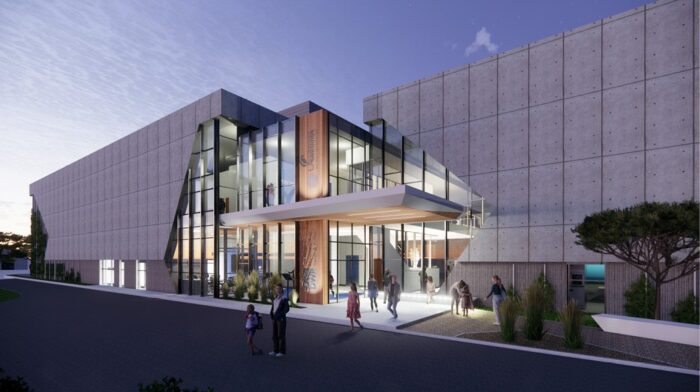
The Los Angeles Groundwater Replenishment Project at The Donald C. Tillman Water Reclamation Plant in Van Nuys, Calif., represents a long-necessary step in water resource resilience for 4 million people living and working in Los Angeles. When operational in spring 2027, the new facility will return 22,000 acre-feet of purified water to the San Fernando Groundwater Basin yearly.
High above the Never Summer Mountains of Colorado’s Rocky Mountain National Park, water vapors condensed into clouds freeze into ice crystals. The crystals grow in density and weight before gravity takes over and they fall from the sky as snow. On the ground, the dense crystalline snowpack deep in the forest sits solid and still until April. As the bright sun of early spring shines on Colorado’s Western Slope, the frozen mass feeding the Upper Colorado River Basin melts. Eventually, those rivulets of water become the Colorado River.
During the annual runoff, which begins in April and peaks in May or June, the Colorado River receives an average of 14.6 million acre-feet of natural streamflow, 92 percent of which comes from the Upper Basin. From its origin on Poudre Pass, the Colorado River flows downslope and southwest for some 1,450 miles before ending at the Gulf of California in northwestern Mexico. Along the way, the Colorado River passes through eight more National Parks and drives a $1.4 trillion economy while providing water to nearly 40 million people living from Telluride to Tijuana. Sometimes referred to as the “River of Law” due to the numerous legal disputes and highly contested nature of its flow, the Colorado River provides water rights to seven states and two countries.
Among the recipients and beneficiaries are the citizens of Los Angeles.
Searching for Resilience
In 2024, the Los Angeles Department of Water & Power (LADWP) purchased approximately 72 percent of its water from the Metropolitan Water District of Southern California, which draws from the Colorado River and the California State Water Project. A further 15 percent of L.A.’s water is imported from Northern California via the Los Angeles Aqueduct while just 10 percent is drawn from local groundwater.
Jesus Gonzalez, LADWP’s manager of Ground Water and Recycled Water, explains that all of this is about to change.
“Los Angeles Department of Water & Power was formed in 1902 when the city’s population was just over 100,000 residents,” begins Gonzalez, who has been with the LADWP for 22 years. Without intending to spend the entirety of his career working in the public sector, Gonzalez started an internship with LADWP to enhance his coursework at UCLA while earning a bachelor’s degree in civil engineering. He quickly became enmeshed in a rewarding mentorship that helped him appreciate the value of having a career closely connected to improving people’s lives. “The growth of Los Angeles is wholly intertwined with the 123-year history of LADWP,” he adds. “L.A. is now one of the largest cities in the world. LADWP provides close to 100 million gallons of water a day to 4 million customers, with similar responsibilities on the power side.”
Geographically, LADWP’s service area stretches 464 square miles. In getting water directly to 4 million people, LADWP relies on more than 7,200 miles of pipes along with related infrastructure and storage facilities.
“In simple terms, for L.A. and most of California, the water situation is dire,” says Gonzalez. “There is tremendous demand for water and a lack of supply.
“LADWP’s biggest challenge relative to water is that 90 percent of our supply is imported, arriving by aqueduct from the Colorado River or the California State Water Project,” he explains. “These supplies are being threatened by several factors, including climate change. In 2022, California faced the driest year in recorded history, followed by the wettest year in 2023. There is also a risk of contaminated groundwater. And, of course, L.A. sits on the San Andreas fault, which could easily damage either aqueduct in an earthquake.”
To curb local reliance on imported sources by looking inward, LADWP is searching for resilience in the face of uncertainty.

Using progressive design-build, LADWP, LASAN and Jacobs increased the size and capacity of the original project by 30 percent without additional cost.
Groundwater Replenishment
“Right now, our focus is where are we going to get water for the next 20 to 50 years,” continues Gonzalez. “The Los Angeles Groundwater Replenishment (LAGWR) Project represents one of the most significant projects in LADWP’s history. We are shifting to increasing our groundwater supply by recycling purified wastewater to replenish subsurface aquifers.”
The plan to enhance the local groundwater supply begins with modifying L.A. Sanitation and Environment’s (LASAN) second-largest wastewater treatment facility. The Donald C. Tillman Water Reclamation Plant in Van Nuys processes 80 million gallons of waste daily and produces 26 million gallons of recycled water for environmental benefits. Operational since 1985, the plant’s public Japanese Garden and unusual building form have been used as backdrops in dozens of Hollywood movies. Currently, the plant releases treated water into the Los Angeles River, comprising most of the river’s flow.
“The scope of this groundwater replenishment project represents L.A.’s most significant investment in water reuse,” says Gonzalez. “It is also one of the largest projects in the state of California. This is a $740 million transformation of the plant to convert wastewater to groundwater.”
LADWP’s plan at Tillman is to build upon what has been done before to produce up to 22,000 acre-feet of purified water yearly, while still producing enough water to sustain the L.A. River. After being piped to the Hansen Spreading Grounds, LADWP will spread the purified water. Through time, it will infiltrate the San Fernando Groundwater Basin, remaining for several years before entering L.A.’s future drinking water supply.
“Wastewater from homes and businesses will undergo multiple levels of treatment, including membrane filtration, reverse osmosis and ultraviolet oxidation,” notes Gonzalez. “Combined, these processes exceed regulatory requirements for surface spreading. The recycled water is then used to recharge the San Fernando Groundwater Basin, which provides not just the storage but a highly effective, natural filtration as the water makes its way through the earth to the aquifer. After years of mixing with natural groundwater, LADWP will pump it out and treat it to drinking water standards. That’s the easy part. The hard part is building this while the second-largest wastewater treatment facility in Los Angeles remains fully operational.”
Progressive Design-Build
Considering the challenge of designing and constructing the new facility, LADWP felt the opportunity deserved a certain sense of immediacy. Clearly, the need is urgent. The regulatory requirements are newly favorable, and funding is secure.
“We decided to go with a progressive design-build (PDB) delivery process for this project, which has rarely been done in the water sector,” explains Gonzalez. “Presently, we have $428 million in external funding from local, state and federal sources. This prompted us to go all-in. Progressive design-build was the most efficient way for three very large entities to collaborate on optimizing the design and get this facility permitted and built quickly.”
LADWP partnered with LASAN, two different City of Los Angeles agencies, and collectively hired Jacobs as the progressive design-builder.
In design-build, the owner contracts with a single entity to expedite delivery by streamlining design and construction coordination. In doing so, the owner “buys” the design solution as well as the construction cost and schedule as a package, aiding the owner’s ability to influence it. The PDB model adds a step in the process and offers the owner an off-ramp, if necessary. By combining an owner-integrated preconstruction process whereby the design targets a mutually agreed guaranteed maximum price with design-build’s single point of responsibility, the owner is a vested and profitable partner in cost, schedule, constructability and logistics decisions.
The resulting timeline is indeed expedient. In this case, after the two-year design effort was completed in summer 2024, construction started before the year’s end. Jacobs now is moving at a prescriptive clip; by winter 2026, they will transition from construction to commissioning the facility. LADWP will be returning water to nature by mid 2027. Some of that water will start reaching taps in the early 2030s.
“Using the progressive design-build model, LADWP worked side-by-side with LASAN and design-builder Jacobs to develop an optimal project,” notes Gonzalez. All parties working as integrated experts led to tremendous positives above and beyond business as usual. “This team increased the size and capacity of the original project by 30 percent without additional cost. Meanwhile, everything has gone so much faster than a traditional design-bid-build project. From concept to completion, incredibly, we will deliver this project in just five years.”
As Gonzalez affirms, with substantial funding and integrated partnerships, the project is unfolding at an extraordinary pace for infrastructure of this size. However, the Los Angeles Groundwater Replenishment Project is unlike anything LADWP has ever built.

“This is one of the largest wastewater treatment plants in the state of California. It operates 24 hours a day, of course, and there are only about 10 acres of land available to build the new apparatus,” shares Gonzalez of the long days ahead. “Beyond that, we’ve made the facility 30 percent bigger than originally planned. Jacobs will have more than 400 people onsite trying to build this both quickly and safely, while coordinating every move with LADWP, LASAN and the city. They are building two massive storage tanks—165 feet in diameter—while upgrading all the electrical, digging trenches and operating large machinery on a condensed site with an endless number of utilities in the ground. Crew safety, avoiding utility strikes and limiting shutdowns are everyday imperatives.”
Start Slow, Finish Fast
Jacobs’ Design-Build Operations Manager Joe Broughton leads project delivery with a keen eye on controlling cost, schedule, quality and certainty.
“The top item on our risk register was: can three ‘mega entities’ like LADWP, LASAN and Jacobs work together efficiently, make decisions and advance the project,” notes Broughton. “We spent the first six months of design in discovery mode, searching for ways to improve the project. Though Jacobs did believe the facility’s capacity could be expanded, there is no way we could have gotten to a 30 percent capacity increase without using progressive design-build. Further, by going slow initially, we set ourselves up for a fast delivery.”
Right now, buying out the remainder of the project is keeping Broughton up at night.
“Jacobs was fortunate to receive the signed contract in December 2024 and began sourcing materials immediately,” continues Broughton of the challenges ahead. “With continued uncertainty in the construction industry, our focus is getting the structure above grade to decrease risks and get ahead of the construction schedule.”

During two years of construction, more than 400 people will be onsite at the same time. The scope includes building two massive storage tanks, upgrading electrical, digging trenches and operating large machinery.
A veteran design-builder with more than 20 years of experience, Broughton has worked on advanced water recycling projects worldwide. “I helped develop and build an advanced purified recycled water facility in Australia nearly 20 years ago,” he explains. “Today, in addition to L.A., several other U.S. cities are doing similar projects.
“Wherever human waste is processed as recycled water, a tremendous amount of public outreach is required,” he adds. “Like many advanced water-treatment centers, Tillman will have a public viewing space and educational center for people who want to learn more about the process and benefits for the community.”
As a steward of public resources, Gonzalez is elated to demonstrate the possibilities for government efficiency and expediency at Tillman. He knows the next few years of construction, start-up and testing won’t be easy.
“With all the rebuilding going on due to the windstorm and devastating wildfires, Southern California’s construction industry is facing a workforce shortage,” shares Gonzalez. “So, there will be a lot of competition for skilled workers in the trades. LADWP must diligently maintain quality work as this is built. Relative to emergencies like windstorms or fires, there is a lot of misinformation out there. LADWP is always the best source for information about water or power in L.A., in an emergency or otherwise.”
Gonzalez and his teammates at LADWP will use LAGWR to showcase L.A.’s commitment to water resilience. Big plans are underway to continue to utilize recycled water to ensure the reliability of L.A.’s water supply, and that’s exciting to everyone at LADWP. However, in the meantime, there’s work to be done. Then there will be speeches and press, and a ribbon and a cake to cut. And then, more work to be done.
“We plan to have this plant up and running by March 2027,” says Gonzalez. “Beyond that, we’ll move on to converting our other wastewater treatment facility, which is the largest in California and one of the largest in the world.
“The challenge of water supply is not exclusive to Los Angeles,” he explains. “All the western states face similar concerns. We can’t fix the entire region’s water problems. We are demonstrating leadership in our desire to become more water resilient. We hope to inspire and help others do the same.”

About Sean Vincent O'Keefe
Sean Vincent O'Keefe is an architecture and construction writer who crafts stories and content based on 20 years of experience and a keen interest in the people who make projects happen; email: sean@sokpr.com.