From the Editor: Never Forget That ‘Every Little Bit Counts’
At the end of this turbulent year, I want to highlight some positive things. The state of my country offers little to be excited about in a positive way, in my opinion, so I will rely on some more personal experiences and reflections. Please bear with me.
Although the passing of Jane Goodall isn’t particularly positive, looking back on her life and the effects she had on our planet certainly is something to celebrate. Most everyone knows about her work with primates, revealing their relationships, personalities and the fact that they have learned to make tools. However, to stop there is a mistake. She founded the Jane Goodall Institute for continued primates research and later “Roots and Shoots” to provide opportunities for young people to discover more about our planet as well as how to make a difference and preserve our environment. If you can, please watch Jane Goodall’s last interview on Netflix. She delivers an important message.
European Travel Insights
In the October 2025 issue of Informed Infrastructure, just before my trip to Europe, I ended my column this way: “I hope that this trip will enable me to bring back more insights, both in environmental treatment and safety procedures. And maybe some great restaurant recommendations.” As for the restaurants, I would recommend sitting down at any of the local outdoor restaurants and enjoying whatever they’re serving. Just like any tour guide would say, avoid the main street tourist traps.
As for the environmental items, the parts of Europe I visited seem to be ahead of us in some of the small but important things individuals can do. I’ve often promoted the little things we all can do to conserve, recycle and help save the environment. Some say it doesn’t matter whether they throw away a plastic bottle or recycle it, since it’s insignificant by comparison to the commercial and industry impacts on the environment. I echo part of Jane Goodall’s message: “every little bit counts.”
In the parts of Portugal and Spain I visited, for example, the bottle caps on water bottles remain attached to the bottles when they’re opened—there are no caps laying around on the sidewalks. The restaurants don’t give you straws. There are many more-easily reached receptacles for trash and recycling. You never have to sign a paper receipt and get a copy for yourself. And everyone seems to pay attention. These are all small things, but, as I have argued and Jane Goodall says: all these actions matter.
Engineering Highlights
As for the engineering aspects I saw (and others didn’t care so much about), there were bridges spanning from the year 500 to “under construction” and everything in between.
• A 1,500-year-old stone arch bridge that must have had 20 spans over a river.
• A railroad bridge designed by Gustave Eiffel, the Ponte de Dona Maria Pia, which probably helped him qualifiy for designing his tower.
• A Baltimore truss bridge in Portugal, made in steel rather than timber as this type of design was developed during our history of bridge design in the 19th century.
• A new (very) high level bridge being constructed over the Douro River for light rail. It’s early in construction and only the beginning of the end-abutments and tower cranes were visible.
No Place Like Home
But my most positive experience for the end of 2025 was homecoming at Valparaiso University. Sure, there were sports and concerts and fireworks and food—those were all great. But the best part was visiting with some of my students who recently graduated. I laughed when they tried to call me by my first name instead of “professor.” I enjoyed seeing them interact with each other after they had been apart for some time. I loved hearing them talk about their new jobs and which projects they’re working on. It prompted me to say at one point, “Listen to you talking like real engineers!”
So, remembering the life of the incredible Jane Goodall and traveling to other countries are positive things to balance the not-so-positive elements of the last year. But my most hopeful thoughts come from listening and watching “my” young engineers as they work to preserve and improve our planet.

About Robert Schickel
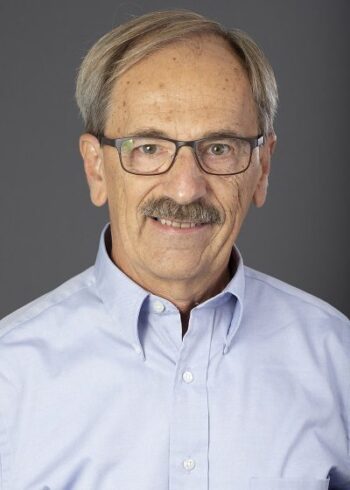
Robert Schickel was born in New Jersey and received his BS in Civil Engineering degree in 1971 from Valparaiso University in Indiana. His career started as a bridge design engineer and expanded to include design of various transportation facilities, including highways, bridges, rail lines and stations, and airport runways. Mr. Schickel managed engineering offices ranging from 20 to 140 people. He also served as a consultant to a large utility company. Mr. Schickel currently resides in Indiana and serves as Adjunct Professor for the College of Engineering at Valparaiso University. He enjoys his retired life at his lake house, playing golf, listening to music and spending time with his family, especially his grandchildren.