Building for Tomorrow: The Crucial Role of Renewable Energy Infrastructure Projects
Infrastructure forms the backbone of our society. Yet, as the years pass, infrastructure in the United States has been showing signs of wear and tear. As the world faces economic hardships and the challenges of climate change, it becomes increasingly apparent that we must not only address existing infrastructure issues, but also transition toward sustainable, renewable infrastructure.
Skanska is certainly aware of these needs and has dedicated more than 130 years to the cause of infrastructure improvement. In a rapidly changing world, sustainable and resilient infrastructure isn’t just an option; it’s a necessity for a brighter and more-sustainable future. Here we will highlight the importance of infrastructure investment, touch upon the state of U.S. infrastructure and underline the significance of renewable infrastructure with real-life examples from our projects.
The Need for Improved Infrastructure
A nation’s infrastructure often reflects its commitment to progress and development. The 2021 “Infrastructure Report Card,” published by the American Society of Civil Engineers every four years, provides a comprehensive evaluation of our nation’s infrastructure based on 17 major categories, and the results are less than satisfactory.
The report card graded various categories, including roads, bridges, transit and energy. The overall grade received was a C-, indicating a significant need for improvement. Some elements exhibit deficiencies in conditions and functionality, with increasing vulnerability to risk. This subpar infrastructure condition is not just an inconvenience; it poses a threat to our economy, safety and environment.
However, glimmers of hope have emerged in the form of Congressional legislation. The bipartisan $1.2 trillion Infrastructure Investment and Jobs Act, signed into law in 2021, seeks to address this issue by providing substantial funding to revamp and upgrade our nation’s infrastructure. The act, which allocates funding through five years, focuses on critical areas such as transportation networks, ports, energy, the environment and resiliency.
The legislation prioritizes the modernization of the energy grid, an essential step in transitioning to a more-sustainable and resilient energy system. Upgrades will not only enhance the nation’s ability to integrate renewable energy sources but also improve the grid’s reliability and resilience in the face of natural disasters.
This monumental legislative effort underscores the importance of investing in our infrastructure and shows that the health and prosperity of our nation depend on these pivotal developments. It not only addresses long-standing infrastructure challenges but promotes economic growth, enhances public safety, and positions the nation for a more sustainable and competitive future.
The Rise of Renewable Infrastructure
While the need for improved infrastructure is paramount, we can’t ignore the pressing issue of climate change. The world is at a crossroads, where our choices today will significantly impact the future of our planet. Renewable infrastructure—encompassing technologies such as solar, wind and hydro power plants—is a beacon of hope in the effort against climate change.
Renewable infrastructure promotes clean, sustainable energy production, reducing the reliance on fossil fuels and mitigating greenhouse-gas emissions. As a forward-thinking company, Skanska recognizes the importance of investing resources in renewable infrastructure projects, which hold the key to a sustainable, greener future for our country.


Photos from the Portsmouth Marine Terminal offshore wind staging port show the size and scale of offshore wind turbines.
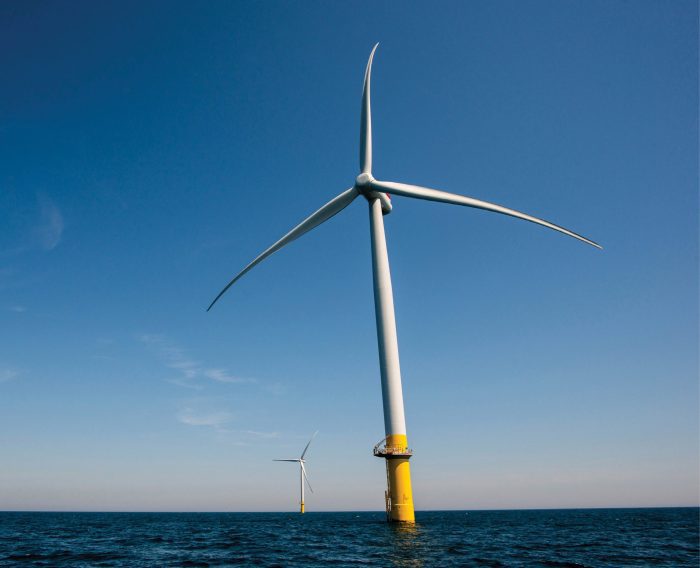
For instance, the Coastal Virginia Offshore Wind project, the largest energy project of its type in the United States, is a monumental renewable infrastructure initiative we’re proud to be part of. According to Dominion Energy, it will be only the second offshore wind project in the nation and, when fully constructed in 2026, the Coastal Virginia Offshore Wind project will deliver clean, renewable energy to the grid, avoid millions of tons of carbon dioxide emissions annually, and help limit carbon and methane emissions for years to come. The two wind turbines currently in operation (27 miles off the coast of Virginia Beach) are the first installed in U.S. federal waters and are displacing up to 25,000 tons of carbon dioxide emissions annually.
In conjunction with Dominion Energy and the Port of Virginia, Skanska has begun redeveloping the 72-acre section of the 287-acre Portsmouth Marine Terminal into a state-of-the-art offshore wind staging port in Portsmouth, Va. The project will support Dominion Energy’s massive renewable infrastructure initiative and signifies a major shift toward renewable energy.
While it may not have the allure of erecting wind turbines, such construction projects are undoubtedly the backbone of sustainable energy progress. These projects also signify our commitment to reducing our carbon footprint and transitioning to a cleaner, more-resilient energy future. By taking the initiative to support renewable infrastructure, we’re not only contributing to a greener planet but also ensuring the long-term prosperity of our nation.
The Complexity of Infrastructure Construction
Infrastructure development isn’t a straightforward process. It involves intricate planning, extensive work and a variety of specialized skills. The complexities of infrastructure construction often are underestimated, with most people only witnessing the finished product without realizing the immense effort and resources invested in its creation.
The staging port at the Portsmouth Marine Terminal will be used to collect and store wind turbine components prior to loading them onto wind turbine installation vessels. This project is crucial to what makes Dominion Energy’s wind farm possible and, when complete, will power 660,000 homes. With the commercial project phase now underway, components of 176 wind turbines are expected to pass through the Portsmouth Marine Terminal, which, once assembled and installed, will generate 2.6 gigawatts of energy.

Skanska’s involvement in the Portsmouth Marine Terminal project serves as an example of the intricacies involved in building this infrastructure. This project uses several complex components including:
• Constructing three heavy-lift berths: the wind turbine generator delivery berth, the wind turbine generator load-out berth and the berth for the steel tube monopiles.
• Strengthening the soils and surface in the upland areas to accommodate handling heavy surface loadings from crane, self-propelled modular transporters, wind turbine generator, and monopile and transition piece components.
• Installing high-mast lighting, stormwater collection systems, perimeter fencing, and other ancillary structures and systems.
The Portsmouth Marine Terminal project is just one of the many examples of complex infrastructure initiatives requiring significant investment and expertise that play a pivotal role in enhancing our nation’s infrastructure and facilitating the transition to renewable energy sources. They’re the unsung heroes responsible for enabling the distribution of clean energy and the efficient functioning of our communities.
Additionally, the ripple effects of such projects extend far beyond their immediate goals. They contribute to economic growth by generating jobs and bolstering regional economies. By prioritizing local recruitment and involvement, Skanska supports not just the essential projects but the local communities where work is taking place. Creating a sense of shared responsibility and pride within the community also helps underline the lasting positive impact of these initiatives. The progress made and the support for renewable energy technologies in local communities, as exemplified by the Portsmouth Marine Terminal, collectively propel the country toward a more sustainable and energy-independent future.
Conclusion
The state of our infrastructure and the impending climate crisis call for immediate and significant action. Investing in infrastructure isn’t merely about constructing roads and bridges; it’s about shaping a better future for our nation. Skanska is committed to this cause, having focused for years on infrastructure development and expanding into renewable infrastructure projects.
The bipartisan Infrastructure Investment and Jobs Act is a step in the right direction, providing the necessary funds to address our infrastructure shortcomings. However, our commitment to the environment and a sustainable future demands we also invest in renewable infrastructure. Clean energy sources—such as wind, solar and hydro power—are essential for reducing our carbon footprint and securing a more sustainable future.
The success of projects such as the Portsmouth Marine Terminal requires not only substantial financial investments but also a wealth of expertise in engineering, logistics and sustainability. It’s crucial to recognize that creating infrastructure is a complex process, often unseen by the general public. The intricacies of projects such as the Portsmouth Marine Terminal construction are a testament to the technical expertise and resource allocation required for successful infrastructure development.
Moving forward, it’s imperative we prioritize the improvement of our infrastructure and continue to invest in projects that align with a sustainable, greener future. The decisions we make today will have a lasting impact on the wellbeing of our nation and the health of our planet.

About Brook Brookshire
Brook Brookshire is senior vice president and general manager, Skanska; email: Brook.Brookshire@skanska.com.